What does same-day business delivery mean?
Same-day delivery describes the requested delivery date, not one universal service level. A direct point-to-point courier may collect a ready parcel and travel to one consignee. A routed service may consolidate stops and deliver within a window. A retailer may use its own driver, a local courier network or a third-party logistics provider coordinating the handoff. Those models can have different order cutoffs, tracking, pricing and coverage.
Read the service promise as a set of conditions: what “day” means, when the clock starts, what counts as a completed attempt and what happens when the receiver is unavailable. Ask whether the time is a target or a guarantee, whether weekends and statutory holidays are included, and how exceptions are communicated. A dispatch scan or pickup receipt confirms movement began; it does not, by itself, prove the customer received the parcel.
Traditional parcel networks publish service standards by product, origin and destination. Canada Post’s parcel delivery standards describe transit in business days and explain the effect of deposit cutoffs. That is a useful contrast: a same-day courier booking is a separate operational arrangement, not an automatic feature of every parcel label.
- Same-day shipping usually means the parcel leaves the shipper that day; same-day delivery means the receiver gets it that day.
- A delivery window is different from an exact appointment time.
- A service-area map and cutoff are as important as the headline speed.
How does a same-day delivery move from order to doorstep?
A short delivery can involve several teams before a driver reaches the address. A dependable process makes ownership visible at each handoff, from the order desk to the person accepting the parcel. That matters most when the customer promise is tight or the shipment cannot simply be left unattended.
- 01
Validate the request. Confirm the address, contact number, receiving hours, parcel count, dimensions, weight and any access instructions. Check whether the item can travel on the selected service.
- 02
Make the parcel dispatch-ready. Pick the correct SKU, protect the contents, attach a readable label and stage the shipment where the driver can collect it. Resolve payment, paperwork or release holds before booking.
- 03
Book within the cutoff. Share the pickup-ready time and required delivery window. A booking made before a provider’s cutoff is not useful if the goods are still being packed when the vehicle arrives.
- 04
Track the handoff. Record collection, route status and delivery evidence in the order or customer-service system. Set an exception contact so a failed attempt does not disappear into an inbox.
- 05
Close the loop. Reconcile proof of delivery, customer notification and any return, redelivery or billing exception against the original order.
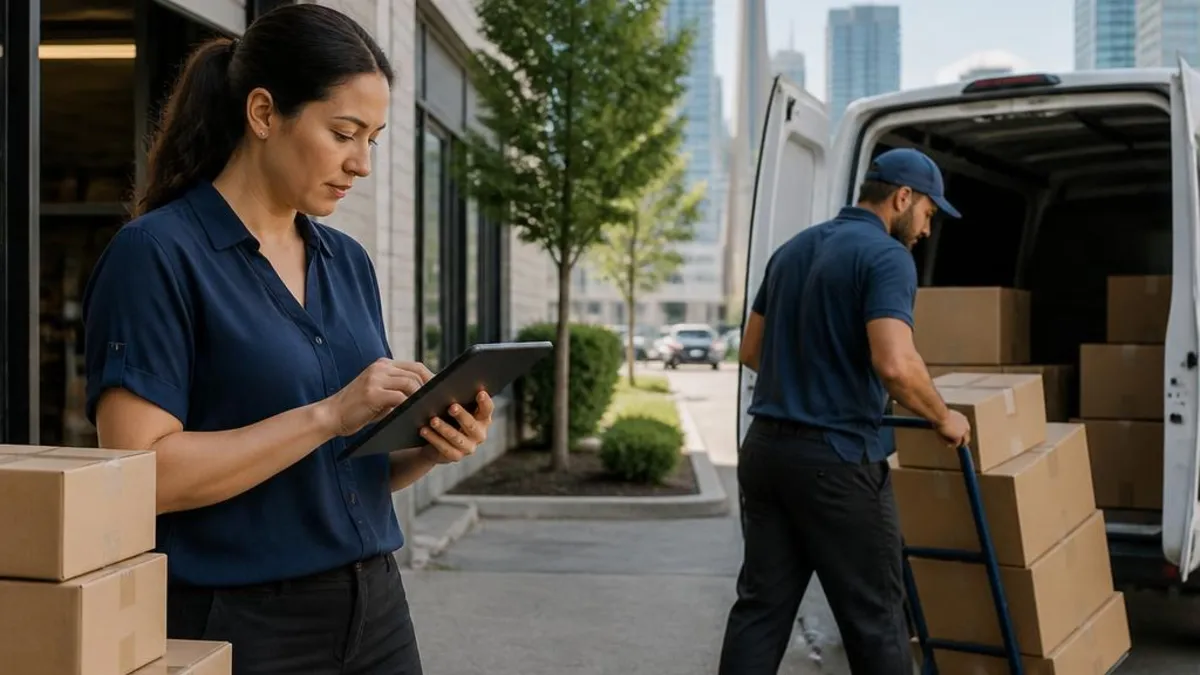
For ecommerce, this workflow should connect the order-management system, inventory record and customer notification. For a parts counter or professional office, a shared dispatch log may be enough. The right tool is the simplest one that keeps the promised window, recipient details and exception owner together.
When is same-day delivery worth the extra coordination?
Use an urgent local service when the cost of waiting is greater than the cost and handling involved in a faster delivery. Examples include a replacement component needed to restart equipment, a time-sensitive document, a store transfer that prevents a shelf gap, or an order promised for a local event. These are use cases, not guarantees that every provider accepts every item or route.
It is usually a poor default for predictable replenishment. If a customer, store or job site can plan ahead, scheduled parcel, consolidated route or less-than-truckload service may be easier to budget. Moving every order into an urgent channel can hide avoidable planning issues, such as late order release, inaccurate inventory, an unrealistic cutoff or a recurring shortage.
| Option | Best suited to | Confirm before choosing |
|---|---|---|
| Same-day courier | Urgent local documents, parts or parcels | Cutoff, pickup readiness, coverage, window and failed-attempt fee |
| Scheduled local route | Repeat drops with flexible timing | Route days, stop sequence, receiving hours and minimum volume |
| Parcel carrier | Routine domestic orders across a wider network | Product standard, business-day transit, deposit cutoff and tracking |
| LTL or dedicated freight | Pallets, bulky goods or multi-piece commercial freight | Equipment, dock access, appointments, handling and accessorials |
The parcel comparison is not a claim that one option is always faster. It is a reminder to compare like with like: service area, pickup point, shipment size, promised time and what the rate includes. A local courier can be the best fit for a single urgent item while a parcel carrier remains more suitable for planned orders. Businesses shipping frequent online orders can also review our ecommerce fulfillment guide to map the wider order flow.
What changes across Canadian service areas?
“Available in Canada” does not tell you whether a particular same-day trip is available. Coverage may be limited to a city, a set of postal codes, a radius from a dispatch point or a specific pair of locations. A provider may serve central Toronto differently from a suburban industrial park, a rural address or a remote community. Ask for the actual origin-and-destination rule rather than relying on a province-level label.
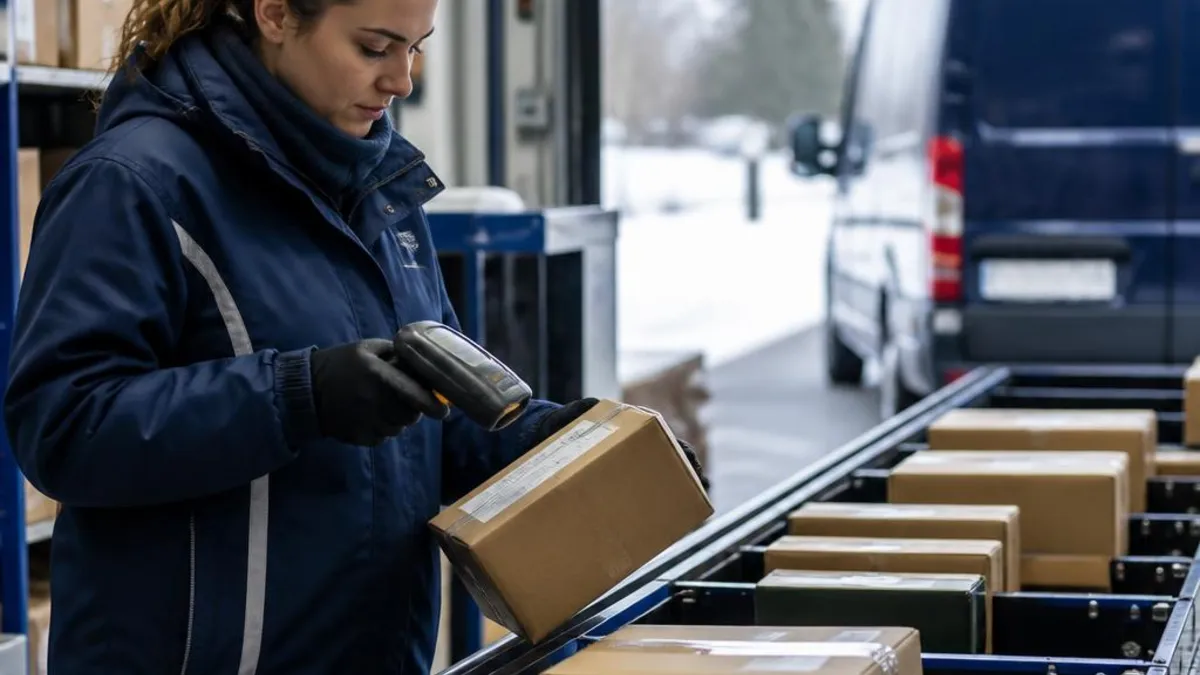
Urban traffic, construction, parking, building security, elevator access and loading-dock appointments can all affect a local delivery window. In winter, weather and road conditions may require a contingency plan. For a business shipping between cities, same-day service may mean a dedicated or chartered movement rather than an ordinary local courier run; verify the operating model and written commitment directly.
Product restrictions matter too. Batteries, aerosols, chemicals, temperature-sensitive goods and other regulated items can need special handling or may be excluded. Transport Canada’s dangerous goods guidance explains the federal framework for safe transport by road, rail, air and water. A shipper should identify the item accurately and confirm the carrier’s acceptance and packaging rules before booking; a fast service does not override those requirements.
What affects the cost of a same-day courier?
Same-day delivery pricing is quote-specific. A direct trip, a multi-stop route and an on-demand dispatch use vehicle time differently, so a headline rate cannot be compared without its service assumptions. Ask for a written breakdown that shows what is included and which events add charges. Avoid assuming a quoted base amount covers waiting, parking, tolls, extra handling or a second attempt.
The main cost drivers usually include distance and route time, pickup urgency, parcel size and weight, number of stops, vehicle type, access requirements and the delivery window. Demand at peak periods can affect availability or price. A late order may require a dedicated run when a scheduled route has already departed. Returns, exchanges and after-hours service should be priced as separate tasks unless the quote says otherwise.
Compare the total cost of the delivery process, not just the courier invoice. Include staff time to locate inventory, pack and label the order, meet the driver and handle exceptions. Then compare that total with the operational consequence of waiting: production downtime, a missed appointment, a store transfer delay or a service recovery. The calculation will differ by business and order; no single premium is justified for every shipment.
- Ask whether the rate is flat, distance-based, time-based or a combination.
- Confirm waiting time, cancellation, redelivery, return-to-origin and extra-stop charges.
- Check whether fuel, tolls, parking, stairs, oversized items or special handling are included.
- Request the same scenario from each provider: same parcel, addresses, cutoff and required window.
For a broader monthly view of storage, transport and handling categories, use the supply-chain cost calculator as an educational planning aid.
What should a business ask before booking?
A useful quote starts with a clear service brief. Give each provider the same shipment details and ask for written answers that can be compared. If the business is exploring ongoing support rather than one urgent run, include order volume, peaks, product profile and the systems used to release orders.
- 01
Coverage and cutoff: Which postal codes are eligible, what is the latest ready-to-collect time and what delivery window is actually offered?
- 02
Capacity and vehicle: What parcel dimensions, weight, handling needs or number of stops can be accepted? Is the service direct or routed?
- 03
Tracking and proof: Which milestones appear in tracking, what counts as proof of delivery and how quickly are exceptions escalated?
- 04
Recipient requirements: Can the driver call on approach, obtain a signature, follow site-access instructions or use an appointment dock?
- 05
Price and liability: What is the complete rate, which extras may apply and what limits or claims process govern loss or damage?
- 06
Continuity: Who is the after-hours contact, what is the backup plan and how are service failures reviewed?
For recurring orders, ask how the provider connects to your order workflow and how inventory, labels and customer notifications stay synchronized. A third-party logistics provider may coordinate warehousing and fulfillment alongside transportation, but that broader scope should not be confused with a guarantee of local same-day courier coverage.
For example, ByExpress’s published 3PL service information describes fulfillment operations and a same-day shipping cutoff. That is a provider-published description, not independent verification of a particular lane or delivery date. Confirm the exact location, order deadline, handoff, destination coverage and service commitment in a current written quote.
How can same-day service fit into a business workflow?
The cleanest process defines which orders qualify before urgency appears. Set a cutoff by location, identify who can approve an exception, and maintain a ready-to-ship area with the labels and packing materials required for common orders. Keep inventory availability current so customer support does not promise an item that is still on a receiving dock or allocated to another order.
Choose a small set of measures that answer practical questions. Track on-time delivery against the promised window, first-attempt completion, order accuracy, exception response time and total cost per completed delivery. Define start and end points consistently. A shipment marked “on time” at pickup does not tell you whether it reached the intended receiver before closing.
Review misses by cause rather than blaming the driver or the warehouse by default. Late order release, a wrong address, incomplete access details, a missed pickup cutoff, traffic and an unavailable recipient require different fixes. Use the record to decide whether to adjust customer promises, change cutoff times, improve order data or use a different transport option for a particular lane. The supply-chain KPI library can help teams set consistent definitions before comparing results.
What do businesses typically value in a delivery partner?
When businesses evaluate a local courier or a wider logistics partner, recurring priorities tend to be operational rather than flashy: clear communication, dependable pickup routines, accurate delivery records, sensible exception handling and rates that are understandable before dispatch. These are evaluation criteria, not customer testimonials or claims about any one company.
A useful partner makes it easy to know what has happened and what comes next. That means a named contact or escalation path, status updates that match the actual handoffs, and a process for documenting a missed window. Flexibility matters, but it should have boundaries: service hours, eligible items, coverage limits and costs should be clear enough for staff to make the right promise.
For a one-off urgent delivery, a local courier quote may be all that is needed. For a growing ecommerce or retail operation, compare the courier workflow with broader fulfillment, warehousing and transportation options. The right design may combine several services rather than asking one delivery product to solve every inventory and distribution problem.
Frequently asked questions
What is the difference between same-day shipping and same-day delivery?
Same-day shipping usually means the order is handed to a carrier or leaves the shipper on the day it is processed. Same-day delivery means the parcel reaches the intended receiver that day. Confirm the service definition, cutoff, destination coverage and proof-of-delivery standard in writing before using either phrase in a customer promise.
How late can a business book a same-day courier?
There is no universal cutoff. It depends on the provider, pickup location, route, vehicle availability, parcel readiness and requested delivery window. Ask for the local cutoff that applies to the exact pickup and destination, and leave enough time to finish picking, packing, labeling and release checks before the driver arrives.
Does same-day courier service cover all of Canada?
Not as one uniform local service. Same-day coverage is often defined by specific cities, postal codes, routes or provider locations. A trip between distant cities may require a separate dedicated transport arrangement. Verify the exact origin and destination, service hours and exception plan instead of relying on a broad nationwide label.
How much does same-day business delivery cost?
The price depends on route distance and time, urgency, parcel size, number of stops, vehicle and handling needs, delivery window and any waiting or reattempts. Request an itemized quote using the same shipment details from each provider. Include internal packing and exception-handling time when comparing the total cost with a slower option.
Can a same-day courier deliver regulated or temperature-sensitive goods?
Only if the provider accepts the item and can meet its handling, packaging and documentation requirements. Some goods are regulated or excluded from ordinary parcel service, and temperature-sensitive products may need a controlled environment. Describe the contents accurately and confirm eligibility before dispatch; do not infer acceptance from the speed of the service.
What should a company track for local urgent deliveries?
Track whether the order was ready by cutoff, pickup and delivery milestones, completion within the promised window, first-attempt success, order accuracy, exceptions and total cost. Define each measure clearly and review misses by cause. This helps distinguish a transport issue from late release, bad address data or an unavailable recipient.
Related resources
Freight Management GuideCompare shipment profiles, carrier choices, service requirements and the details that shape a freight quote.Read resource →Ecommerce Fulfillment GuideConnect inventory, order release, pick and pack, parcel shipping and returns in one operating flow.Read resource → Toronto Logistics GuideExplore local logistics decisions across transportation, warehousing, distribution and fulfillment.Read resource →